

The difference between a 2-piece and a 3/4-jointed cue is simple: where the cue separates. The effect of that decision, however, reaches into transport, case size, extension compatibility and the way a cue feels in your routine.
Neither joint style is universally best. The right one depends on what you play, how often you travel and whether you want a compact case or a longer continuous shaft section.
Key Takeaways
- A 2-piece cue separates near the middle and is normally easier to transport in a compact case.
- A 3/4-jointed cue separates nearer the butt, preserving a longer uninterrupted shaft section.
- Joint position affects case length and extension options more clearly than it affects playing quality.
- A precisely fitted, straight joint matters more than choosing a layout because it sounds more advanced.
- Choose around your main game, travel habits, storage space and preferred balance.
The quick answer
Choose a 2-piece cue if compact transport and straightforward storage are your priorities. Choose a 3/4-jointed cue if you prefer a longer shaft section, play snooker or English pool, or expect to use a compatible butt extension.
| Consideration | 2-piece cue | 3/4-jointed cue |
|---|---|---|
| Joint position | Around the centre | Nearer the butt |
| Packed shape | Two similar-length sections | One long and one short section |
| Case | More compact | Longer case required |
| Extensions | Depends on butt fitting | Often well suited to butt extensions |
| Common use | Pool and multi-purpose cues | Snooker and English-pool cues |
| Main appeal | Portability | Longer uninterrupted shaft section |
What is a 2-piece cue?
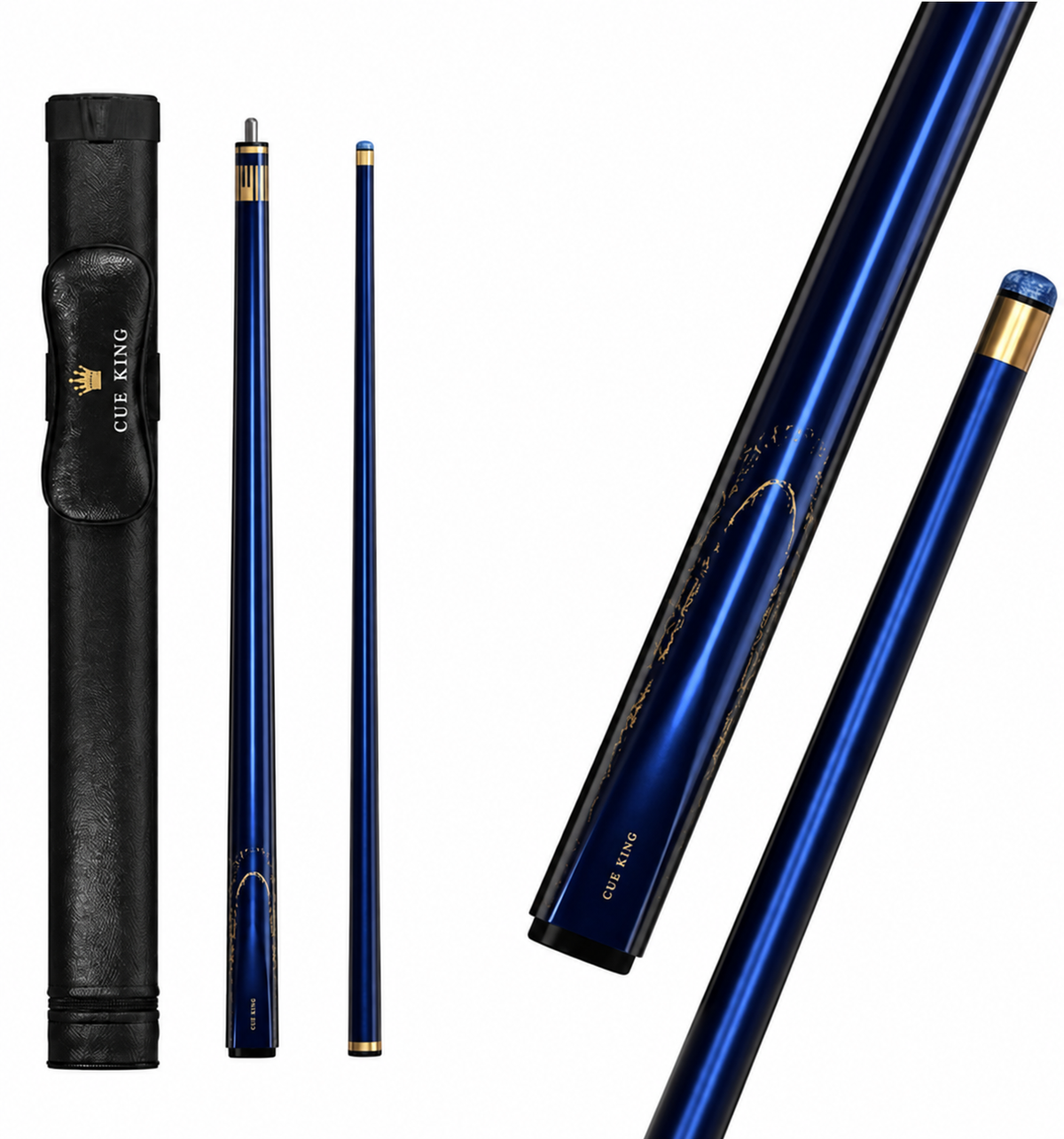
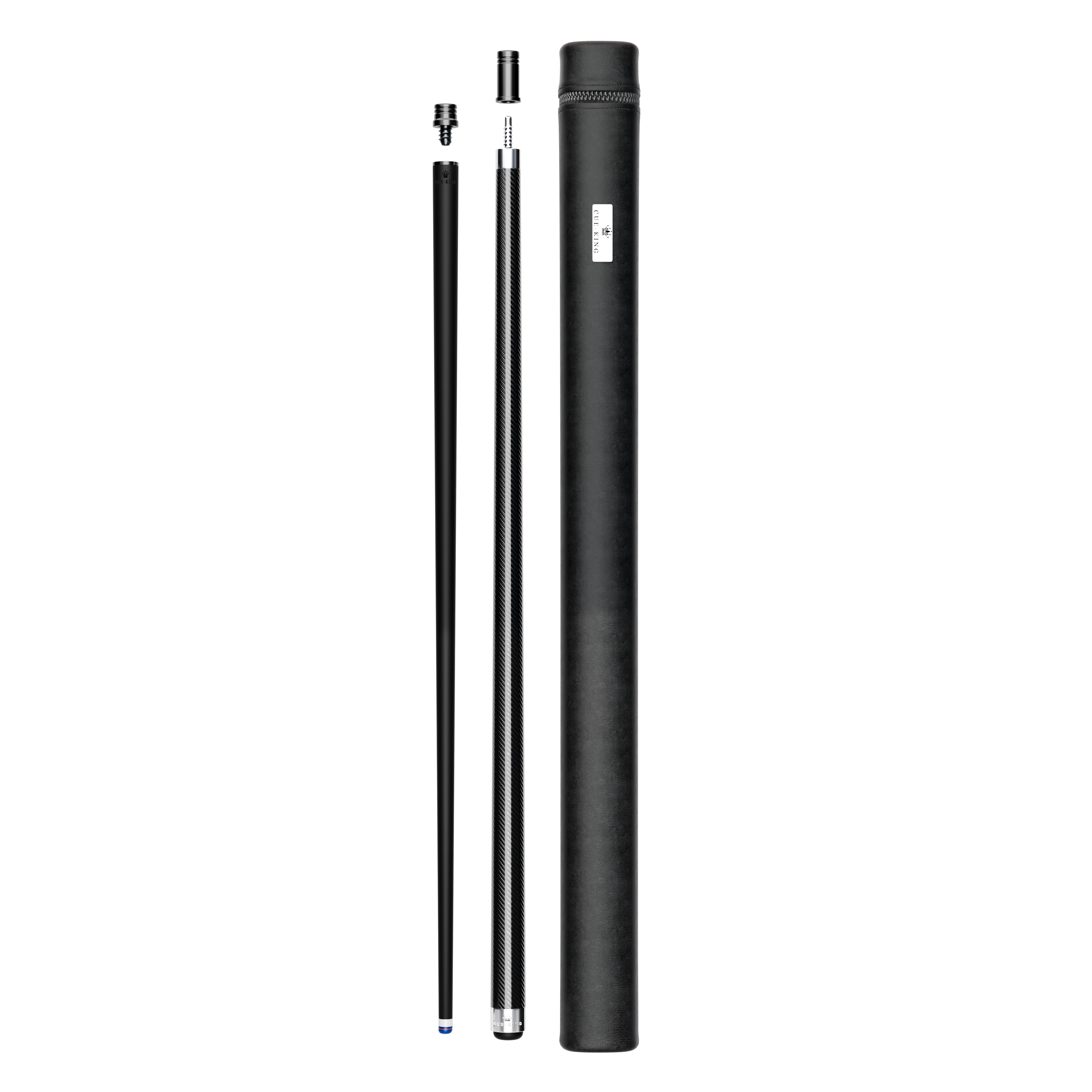
A 2-piece cue separates around its midpoint. The two sections are similar in length, so the cue fits into a shorter case and is easy to store in a car boot, cupboard or locker.
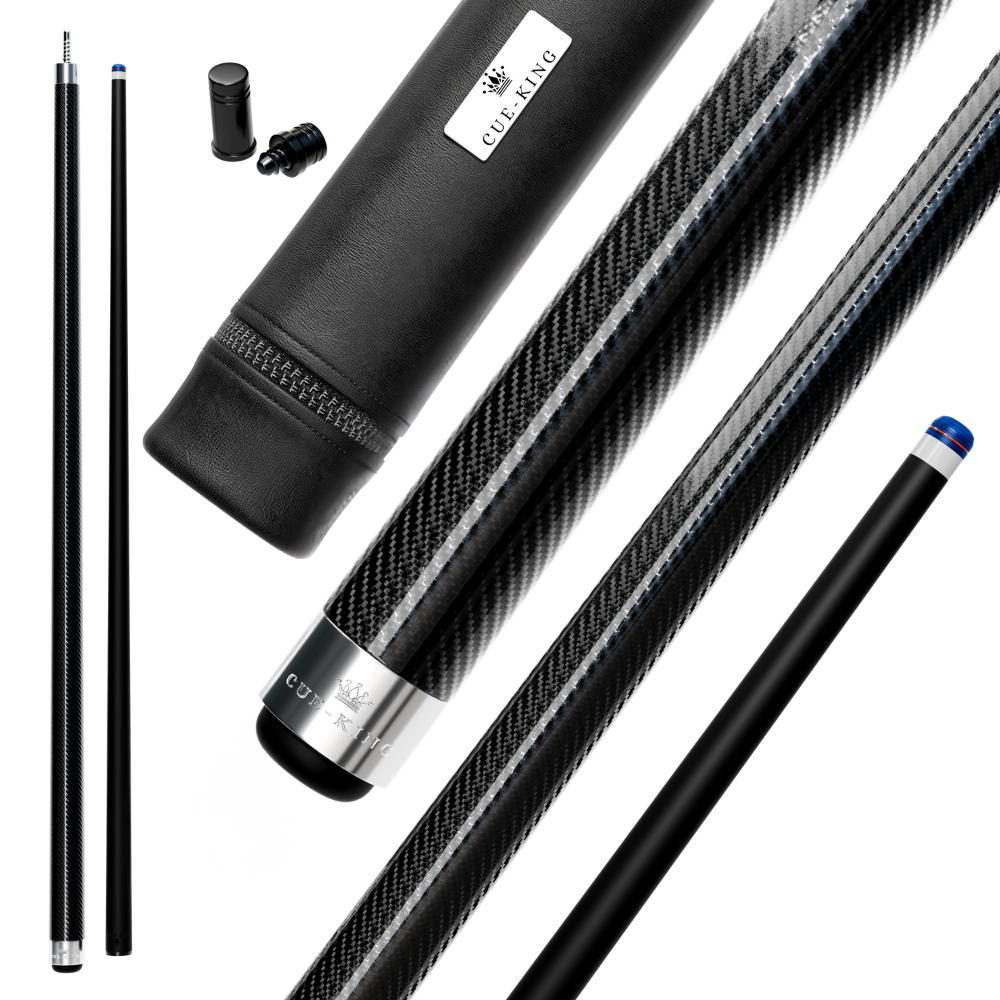
This format is common among modern pool cues. The Cue-King carbon cue combines a 2-piece layout with a gloss exposed-carbon finish and selectable tip options. The Ultra graphite pool cue is another 2-piece design, using graphite/fibreglass construction, a ProFibre grip and a 13mm tip.
Advantages of a 2-piece cue
- It packs into two balanced, compact sections.
- Shorter cases are convenient for frequent travel.
- The layout is widely available across pool-cue materials and styles.
- Assembly is quick and familiar.
Points to consider
The joint sits near the centre of the cue, so its quality matters. It should tighten cleanly, align accurately and remain secure without being forced. Keep the joint free of grit and never overtighten it.
An extension is not determined by the centre joint. If you need extra reach, check the fitting at the base of the butt and confirm that a compatible extension is available.
What is a 3/4-jointed cue?
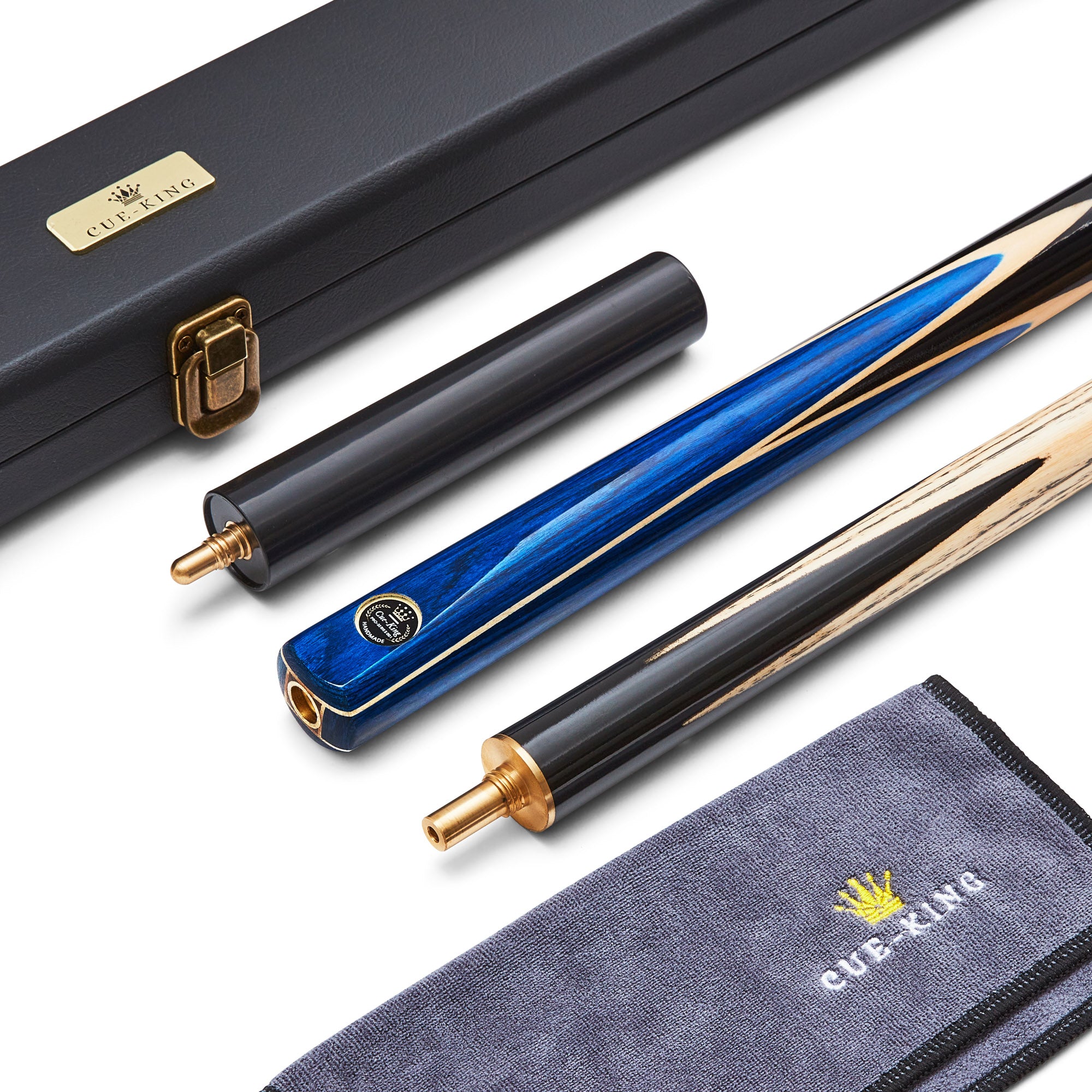
A 3/4-jointed cue has its joint closer to the butt. When separated, most of the shaft remains in one long section and the butt becomes the shorter section.
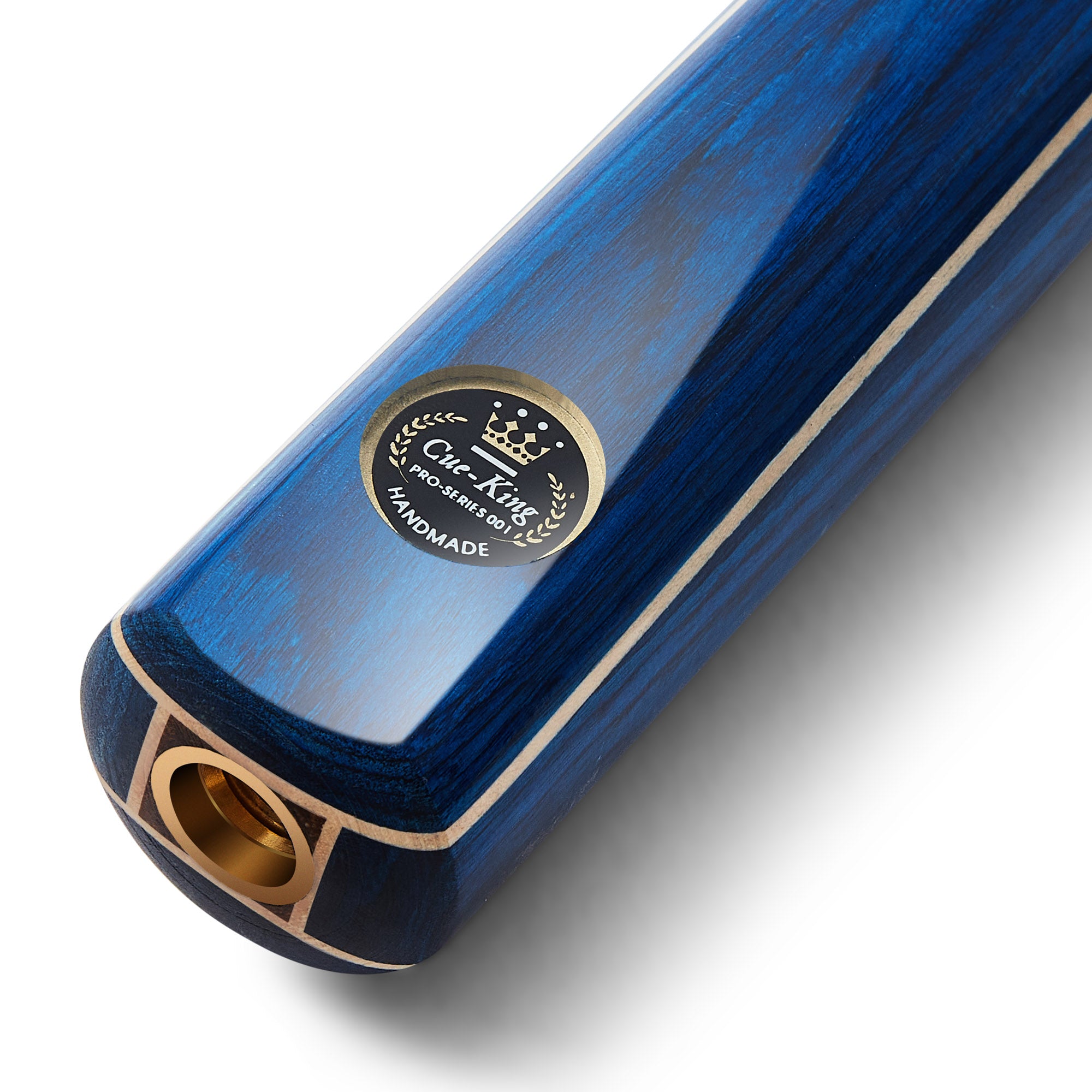
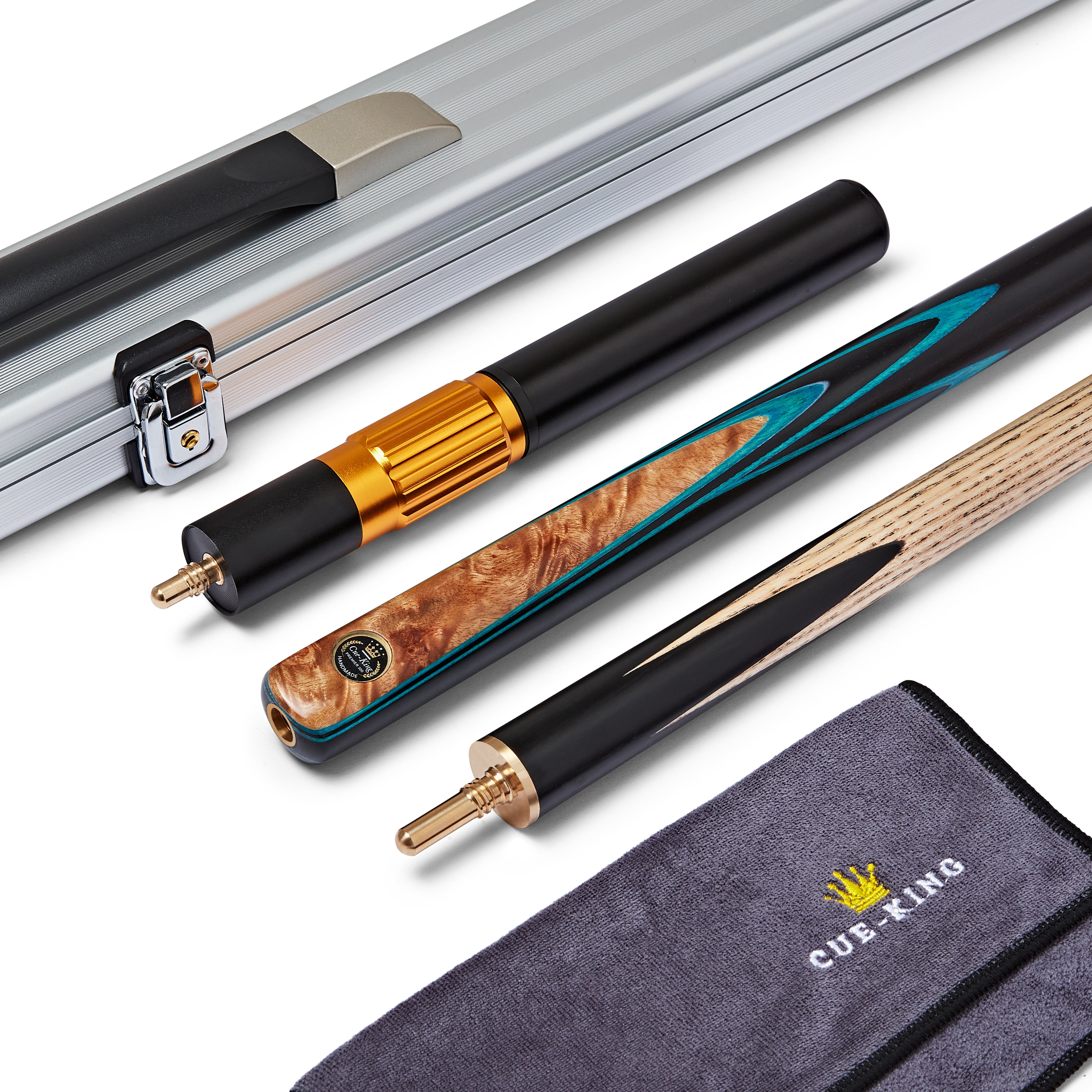
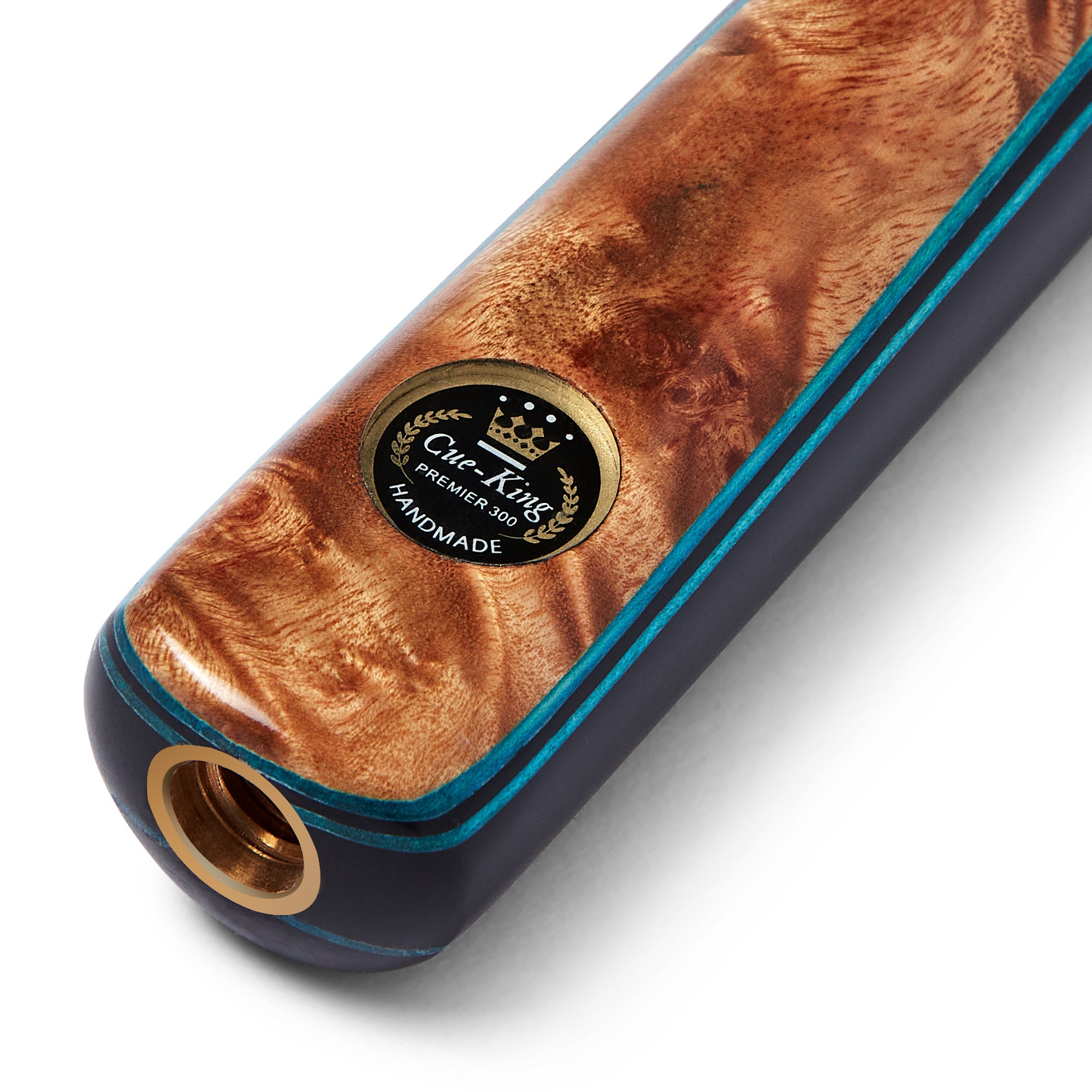
The design is strongly associated with snooker cues and English-pool cues. The handmade Premier 300 uses a 3/4 joint and includes a telescopic extension. The Pro Series 001 is another 3/4-jointed option for players comparing this layout.
Advantages of a 3/4-jointed cue
- Most of the playing shaft remains in one continuous section.
- The shorter butt section can make butt-end extension systems convenient.
- The layout is familiar to many snooker and English-pool players.
- It offers a traditional cue format without requiring a one-piece case.
Points to consider
The longest section is substantially longer than half a cue, so it needs a longer case. Measure the cue sections and any extension before choosing storage. A compact 2-piece case will not fit a typical 3/4-jointed cue.
As with any jointed cue, the joint should be kept clean and protected. Do not assume that a 3/4 joint guarantees better feedback or accuracy: taper, material, tip, balance and build quality all contribute.
Does joint position change how a cue plays?
It can change the player’s perception, but joint position is only one part of the cue. Some players like the feel of a longer uninterrupted shaft on a 3/4-jointed cue. Others notice no meaningful disadvantage from a well-made centre joint and prefer the portability of a 2-piece cue.
The quality of manufacture is more important than the label. A good joint should:
- bring both sections into accurate alignment;
- tighten without wobble or a visible gap;
- remain secure during play;
- separate smoothly after play;
- stay protected from dirt, impact and moisture.
If a cue feels comfortable, rolls straight and gives predictable feedback, its joint is doing its job.
Which joint is best for pool?
Both formats can work. A 2-piece layout is a practical choice for American pool and for players who travel often. It is also common among carbon and graphite/fibreglass designs.
A 3/4-jointed cue may suit English-pool players who prefer a snooker-influenced taper and balance. If you alternate between English pool and snooker, the format can also feel familiar across both games.
Start with the game, tip and shaft you want; then use joint position to narrow the shortlist. The broader guide to pool cues and snooker cues explains how the two cue types differ.
Which joint is best for snooker?
Many snooker players choose 3/4-jointed cues because the long shaft section retains a traditional shape and the butt can accept a useful extension system. The Premier 300, for example, includes both a case and telescopic extension.
That does not make centre-jointed cues unsuitable. If transport and storage are decisive, a 2-piece cue may be the more practical tool. Consistency comes from practising with one well-matched cue, not from following a joint convention at the expense of comfort.
Cases, extensions and travel
Joint layout should be considered as a system:
- Measure the longest section. This determines the minimum internal case length.
- Allow space for the joint. Foam should protect the metalwork without pressure.
- Plan for extensions. Check whether the case has a compartment for the extension you use.
- Choose rigid protection. A strong shell helps protect straightness and the joint during travel.
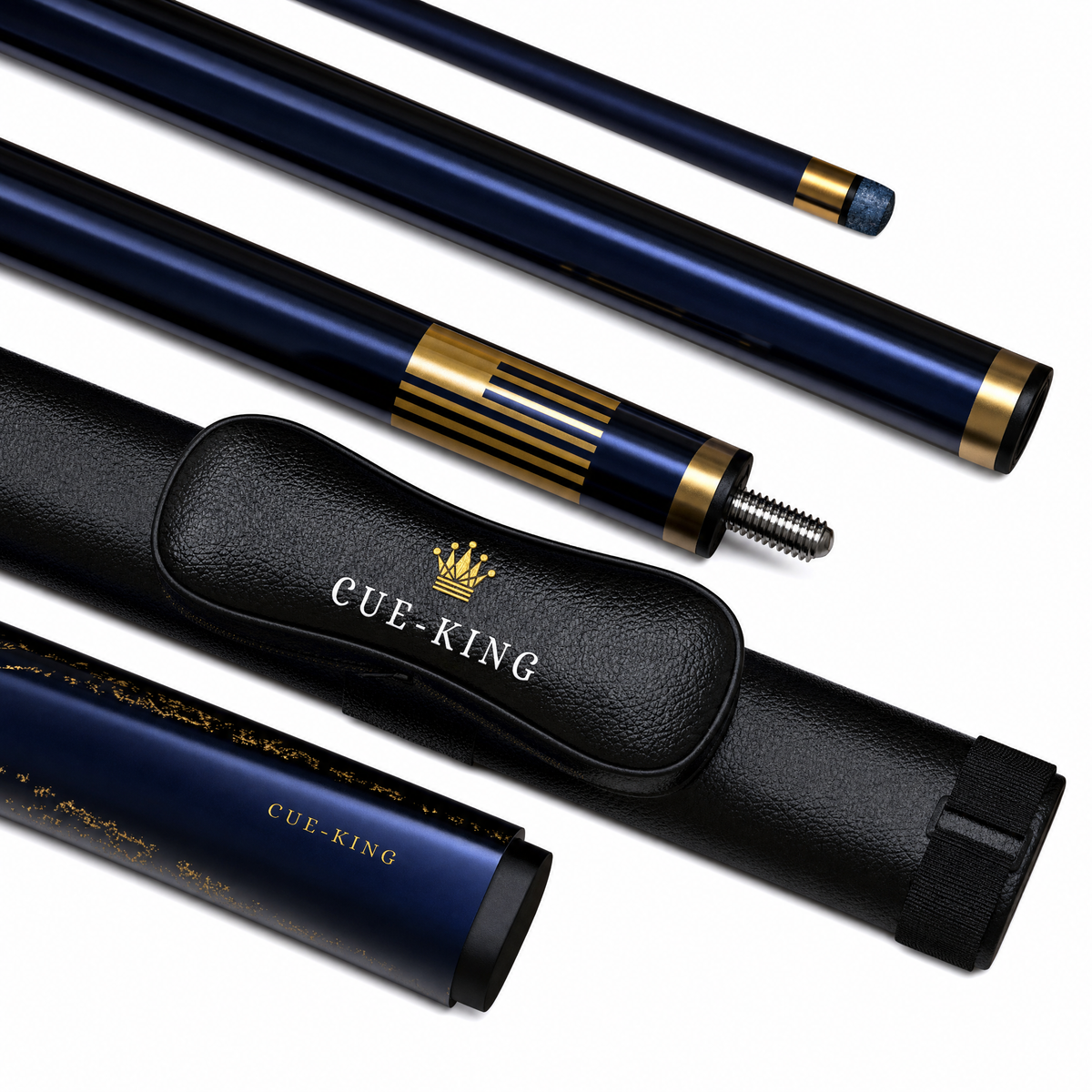
Cue-King offers both a full aluminium cue case with a rigid shell and foam interior, and a leather-finish cue case built around a protective wooden structure. Check the listed dimensions against your cue before ordering. Browse cue extensions separately if your cue does not already include one.
A simple decision checklist
Choose a 2-piece cue if most of these statements are true:
- You want the shortest practical case.
- You travel frequently or have limited storage.
- You prefer modern carbon or graphite/fibreglass options.
- You mainly play pool and do not need a traditional snooker-style layout.
Choose a 3/4-jointed cue if most of these statements are true:
- You prefer a longer continuous shaft section.
- You mainly play snooker or English pool.
- You regularly need an extension for long reaches.
- You are comfortable carrying a longer case.
Final verdict
The best cue joint is the one that removes friction from your routine. A 2-piece cue excels at compact transport. A 3/4-jointed cue preserves a longer shaft section and often integrates naturally with the extension habits of snooker and English-pool players.
Compare the whole cue—not just the joint. Tip, shaft material, balance, straightness, case and extension compatibility will have at least as much influence on ownership and play.
Frequently asked questions
Is a 3/4-jointed cue better than a 2-piece cue?
No joint position is automatically better. A 3/4 joint provides a longer shaft section, while a 2-piece cue packs more compactly. Build quality and personal fit matter more.
Are 2-piece cues good for serious players?
Yes. A precisely made 2-piece cue can be used at any level. Choose a cue that is straight, stable at the joint and suited to the game rather than judging quality from joint position alone.
Can every cue take an extension?
No. Extension compatibility depends on the fitting at the butt and the manufacturer’s design. Check before buying an extension; do not assume that the centre or 3/4 joint determines compatibility.
How should I maintain a cue joint?
Keep it clean and dry, assemble it gently and avoid overtightening. Store the cue in a protective case so the joint faces are not struck or contaminated.
Can I put a 3/4-jointed cue in a 2-piece case?
Usually not. The main section of a 3/4-jointed cue is longer. Compare the case’s internal dimensions with the longest cue section before ordering.
Compare pool cues by joint and tip size
Ready to make a shortlist? Use our pool cue comparison table to compare current Cue-King models by tip size, joint position and supplied case. Open each listing to check its full specification and choose the right option for your game.


Leave a comment
This site is protected by hCaptcha and the hCaptcha Privacy Policy and Terms of Service apply.