
The useful comparison is not simply pool cue versus snooker cue: first separate English pool, American pool and snooker. A slim-tipped cue can suit both English pool and snooker, while American-pool cues often have larger tips. Choose around the game you play, then compare the individual cue’s tip, shaft, joint, length, weight and balance.
No category label guarantees accuracy or better results. Two cues described as pool cues can have very different specifications, and the same joint format can appear on both pool and snooker models. This guide explains what to check before buying.
Key Takeaways
- Decide whether you mainly play English pool, American pool or snooker.
- Compare the actual tip size and construction rather than choosing from the product name alone.
- Joint position affects the lengths of the sections you transport and the case you need.
- A smaller tip does not automatically make a cue more accurate.
- Confirm the selected variant and included case or extension before ordering.
English pool, American pool and snooker compared
| Game | Starting point for cue choice | What to check |
|---|---|---|
| English pool | Slim-tipped pool and snooker-style cues can both be options. | Tip size, comfortable weight, joint format and compatibility with your usual equipment. |
| American pool | Look at cues intended for American pool; larger-tip options are common. | The chosen tip variant, shaft construction and the manufacturer’s intended use. |
| Snooker | Compare snooker cues with a tip, taper and balance that suit your delivery. | Length, weight, joint position and any extension you need for long reaches. |
These are buying starting points, not rigid rules. English pool and snooker specifications overlap. American pool uses a different ball format, so treating every pool cue as the same kind of equipment can lead to the wrong purchase.
1. Tip size: compare the actual model
The tip is the part that contacts the cue ball. Its diameter is a useful specification, but tip shape, condition, chalk and your delivery also matter. A narrow tip can give a different view of the intended contact point; it does not correct an off-line stroke or guarantee more spin.
Start with a diameter suited to your main game and compare it with a cue you already enjoy using. If you are buying a model offered with several tips, check the selected variant before checkout. A photograph or family name may cover more than one configuration.
Our pool cue collection includes different approaches to English and American pool. For traditional snooker-style choices, compare the snooker cue range. Read the individual listing rather than assuming everything in either collection has the same tip.
2. Materials and shaft construction
Ash and maple are used in traditional wooden cue designs. Visible grain, taper and finish can all influence what a player prefers. Graphite, fibreglass and carbon-based designs offer other construction choices, but the material name alone does not establish how a cue will play.
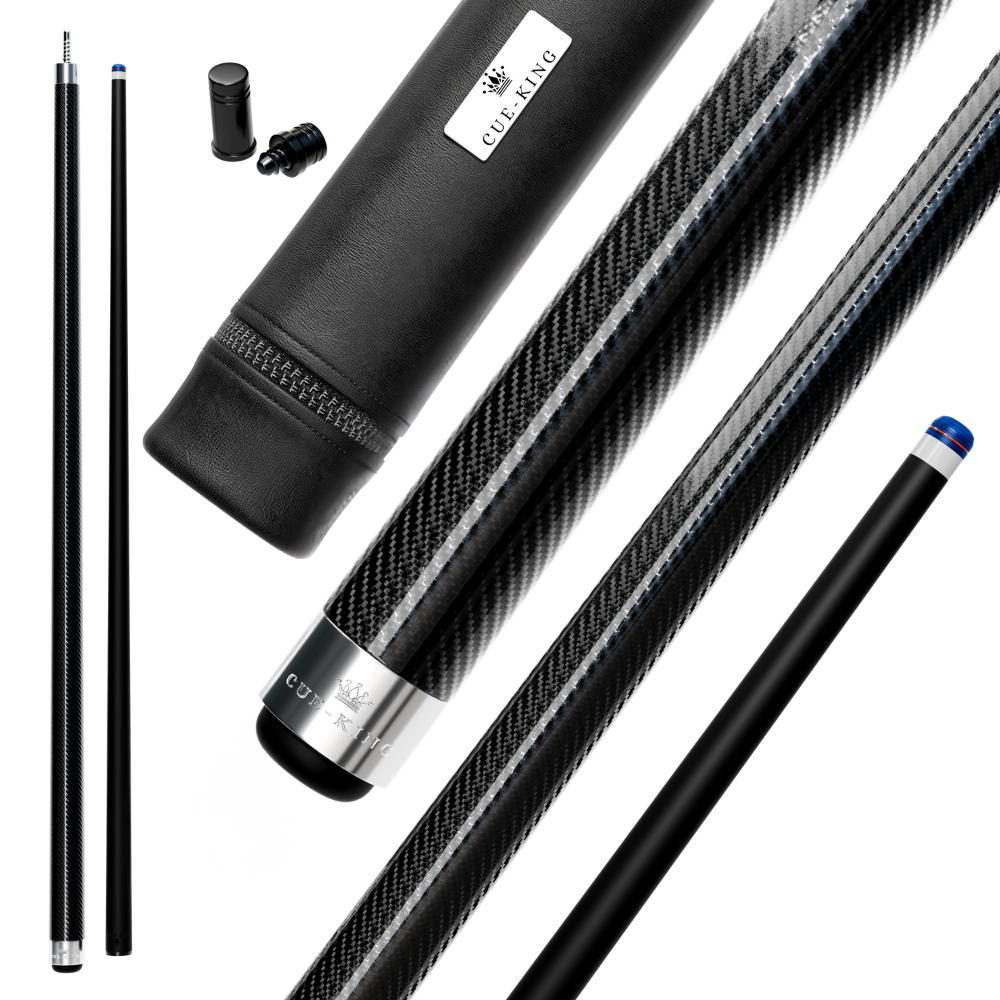
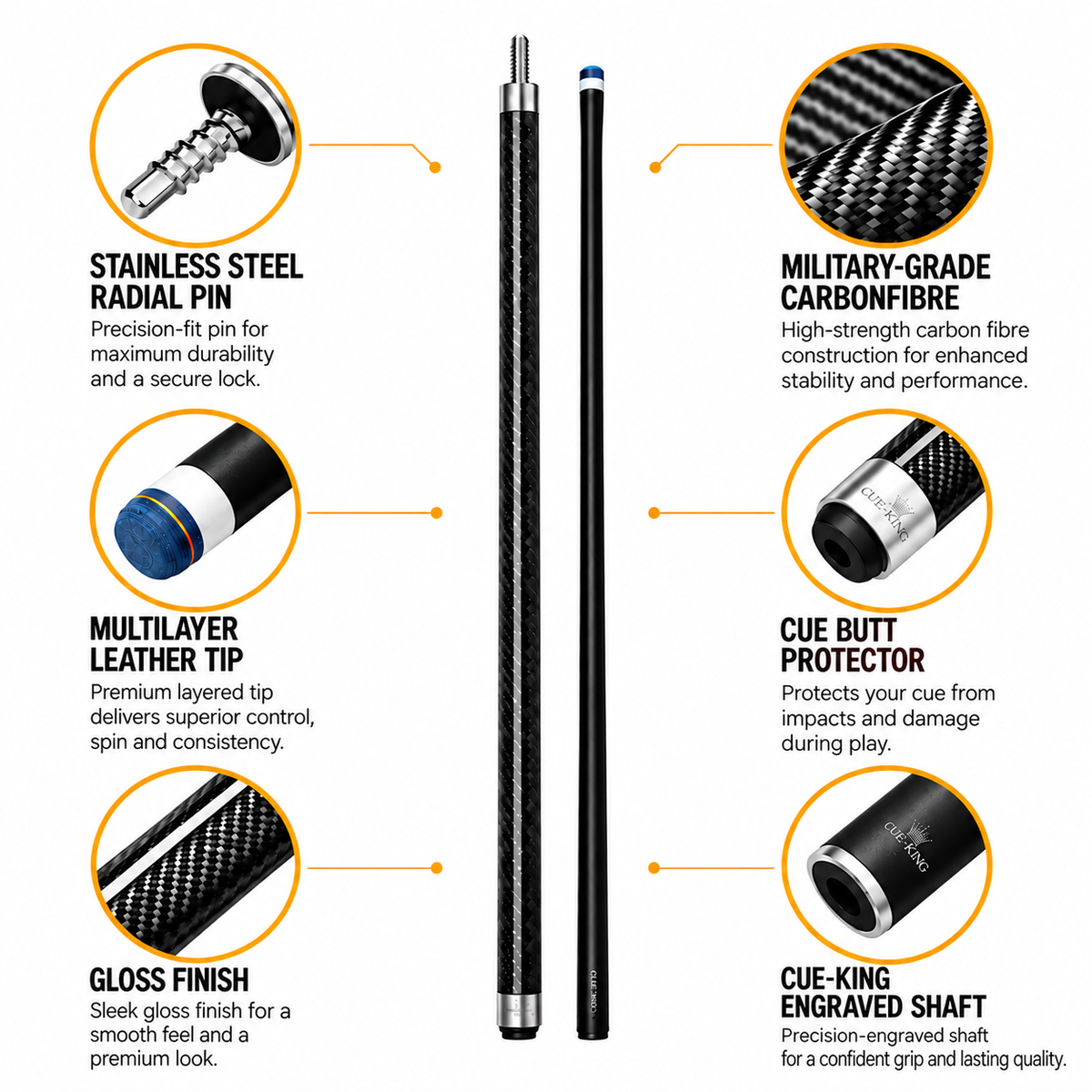
Look at which part of the cue uses each material. A description of a carbon component should not automatically be read as a claim that the whole cue is carbon fibre. Likewise, a decorative finish does not by itself establish shaft construction or performance.
The best comparison considers the complete cue: its straightness, dimensions, joint, tip and feel through your bridge hand. Avoid choosing solely because a material sounds more advanced. Familiar, predictable handling is more useful than a specification you have not related to your own game.
3. Two-piece or 3/4-jointed?
A joint lets the cue separate for transport. A 50/50-jointed cue divides around the middle; a 3/4-jointed design leaves a longer shaft section and a shorter butt section. The resulting section lengths determine which cases are suitable.
Neither format automatically plays better. Joint quality, alignment, balance and personal preference matter. If you travel frequently, compare packed dimensions as well as playing length. If you use an extension, confirm its fitting is compatible with the specific cue.
Read our 2-piece vs 3/4-jointed cue guide for a fuller comparison of portability, joint position and cases. Do not assume two threaded fittings are interchangeable simply because both are described as cue extensions.
Compare verified Cue-King examples
This table shows why the model specification matters. It is a comparison of listed features, not a ranking of accuracy or playing ability.
| Cue-King model | Tip | Joint | Listed construction or package |
|---|---|---|---|
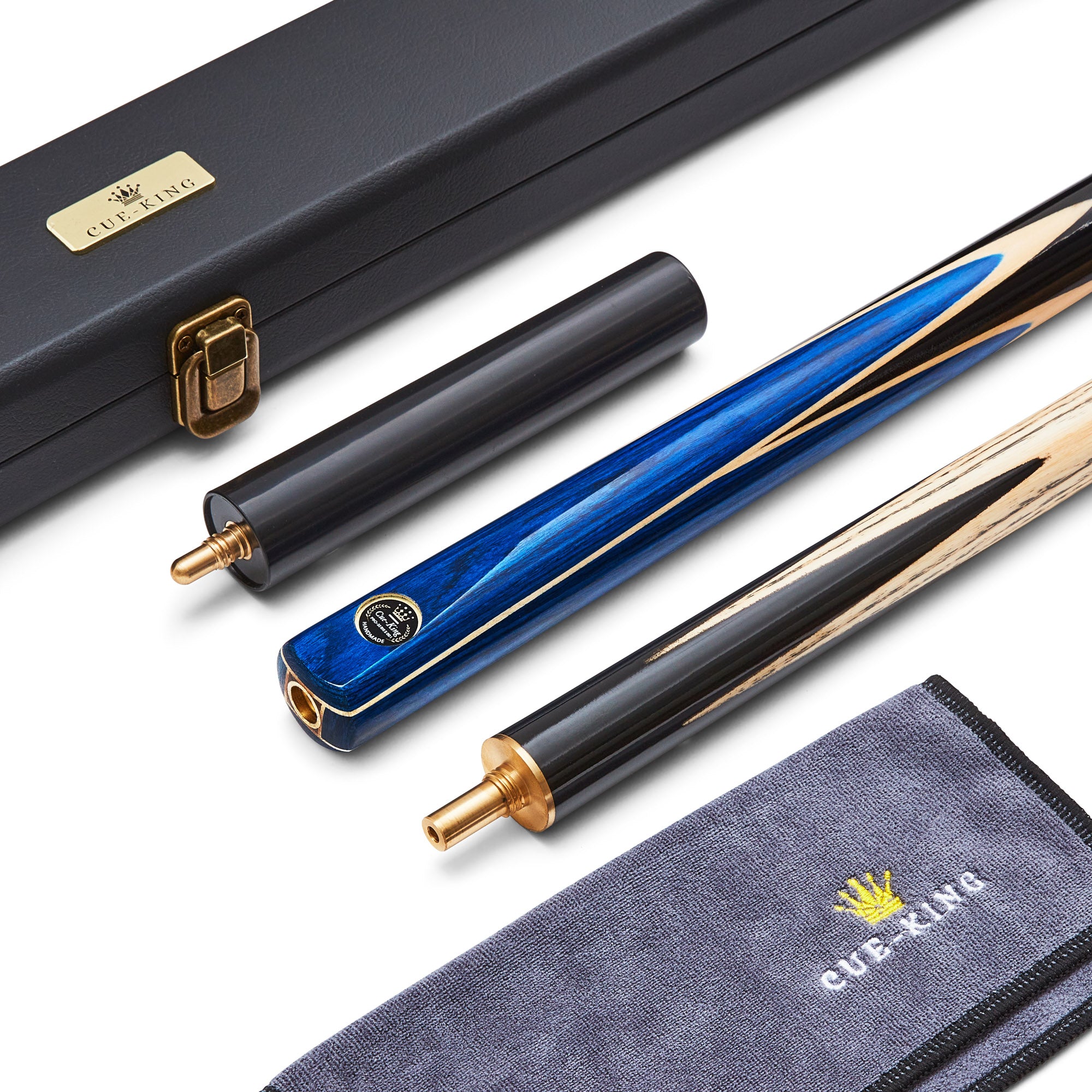
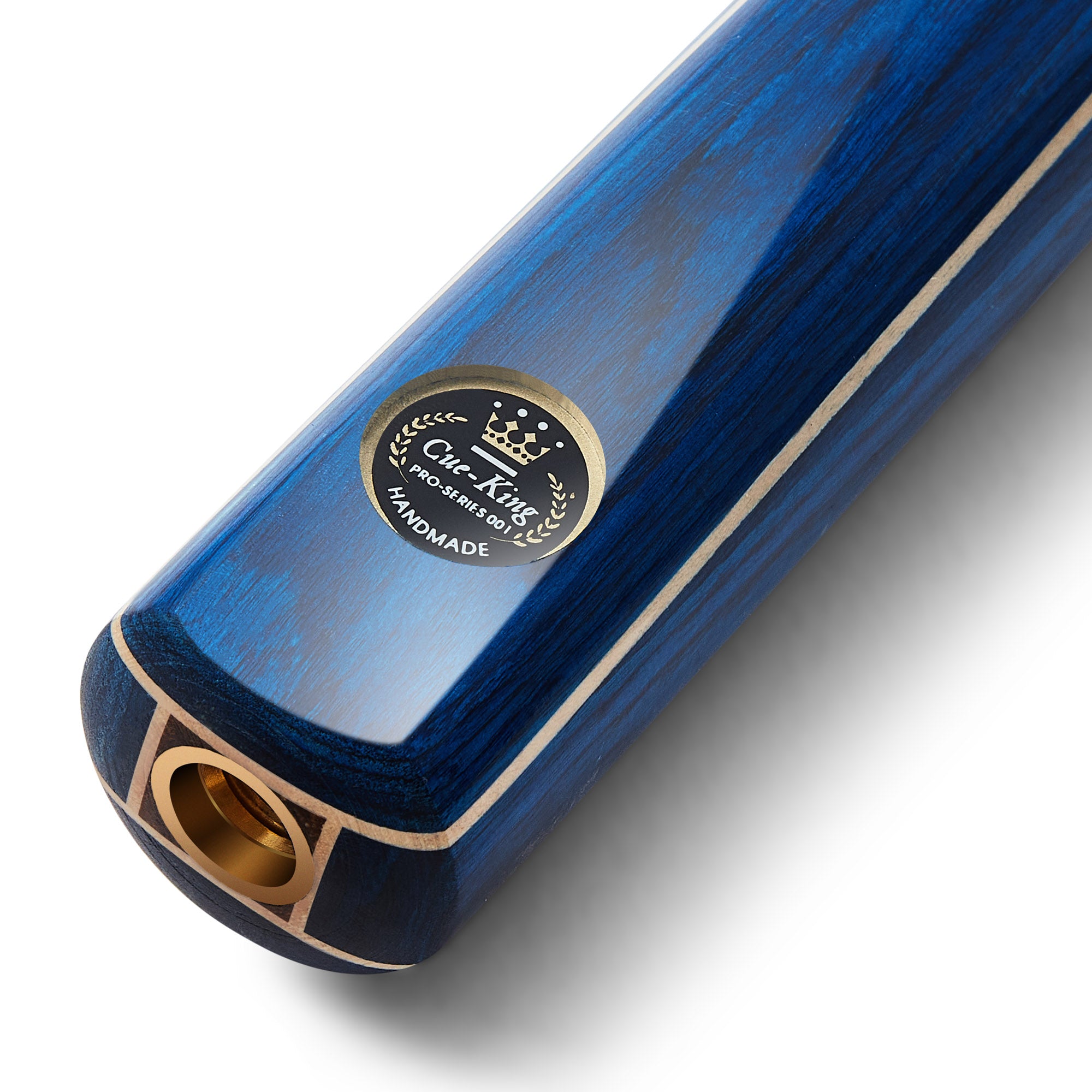
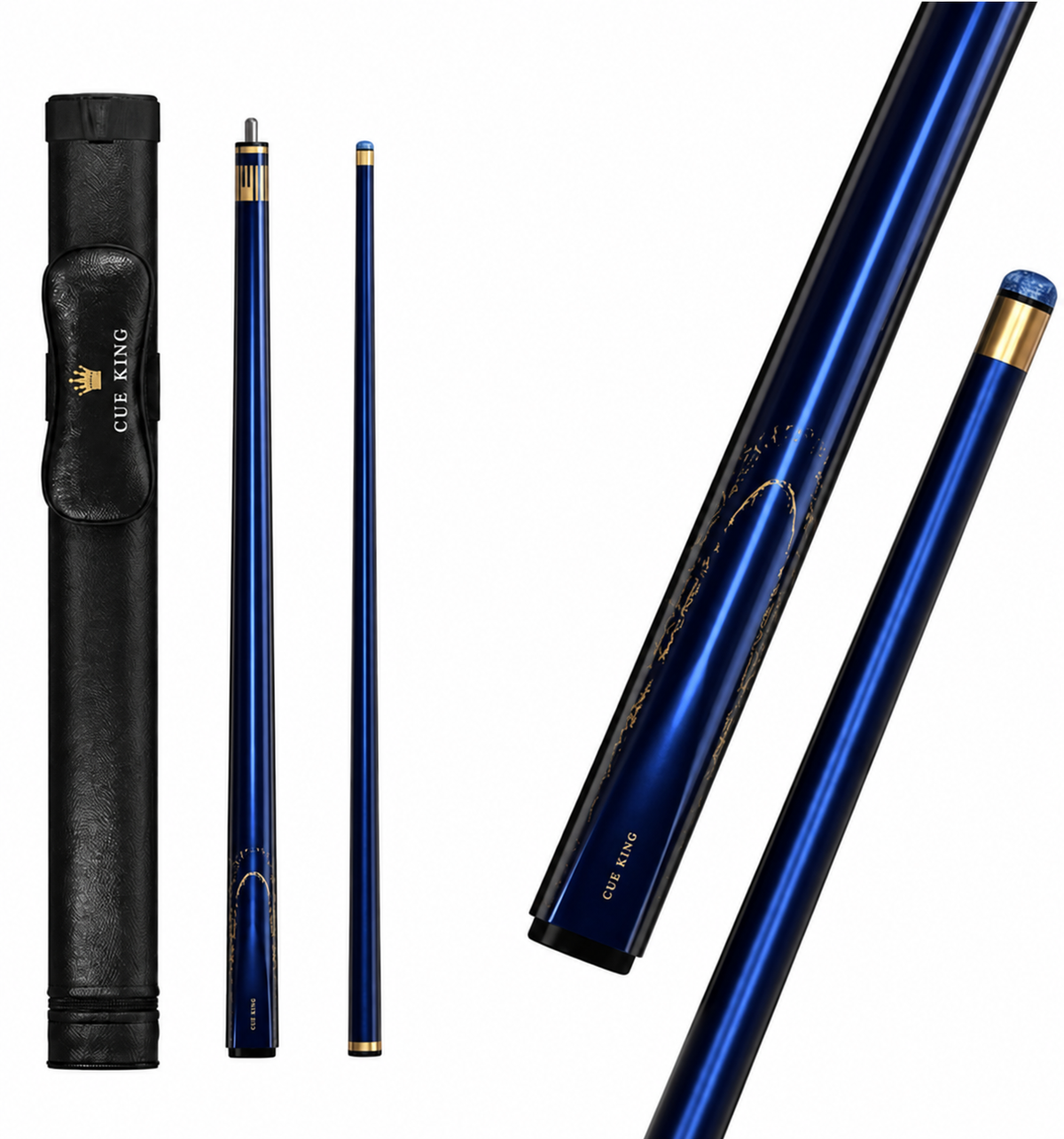
| Pro Series 001 | 9.5mm | 3/4 joint | Ash and maple; hard case and extension included |
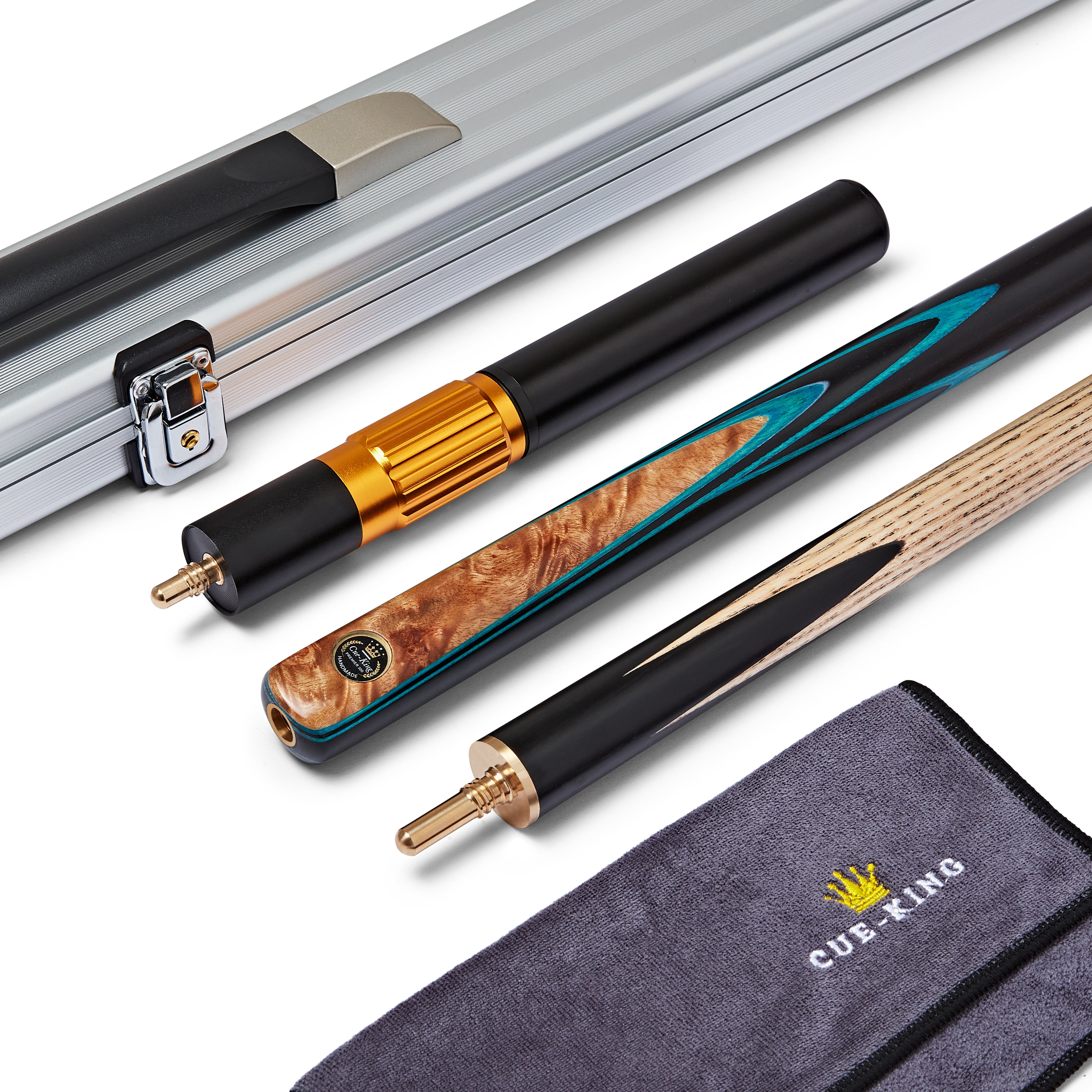
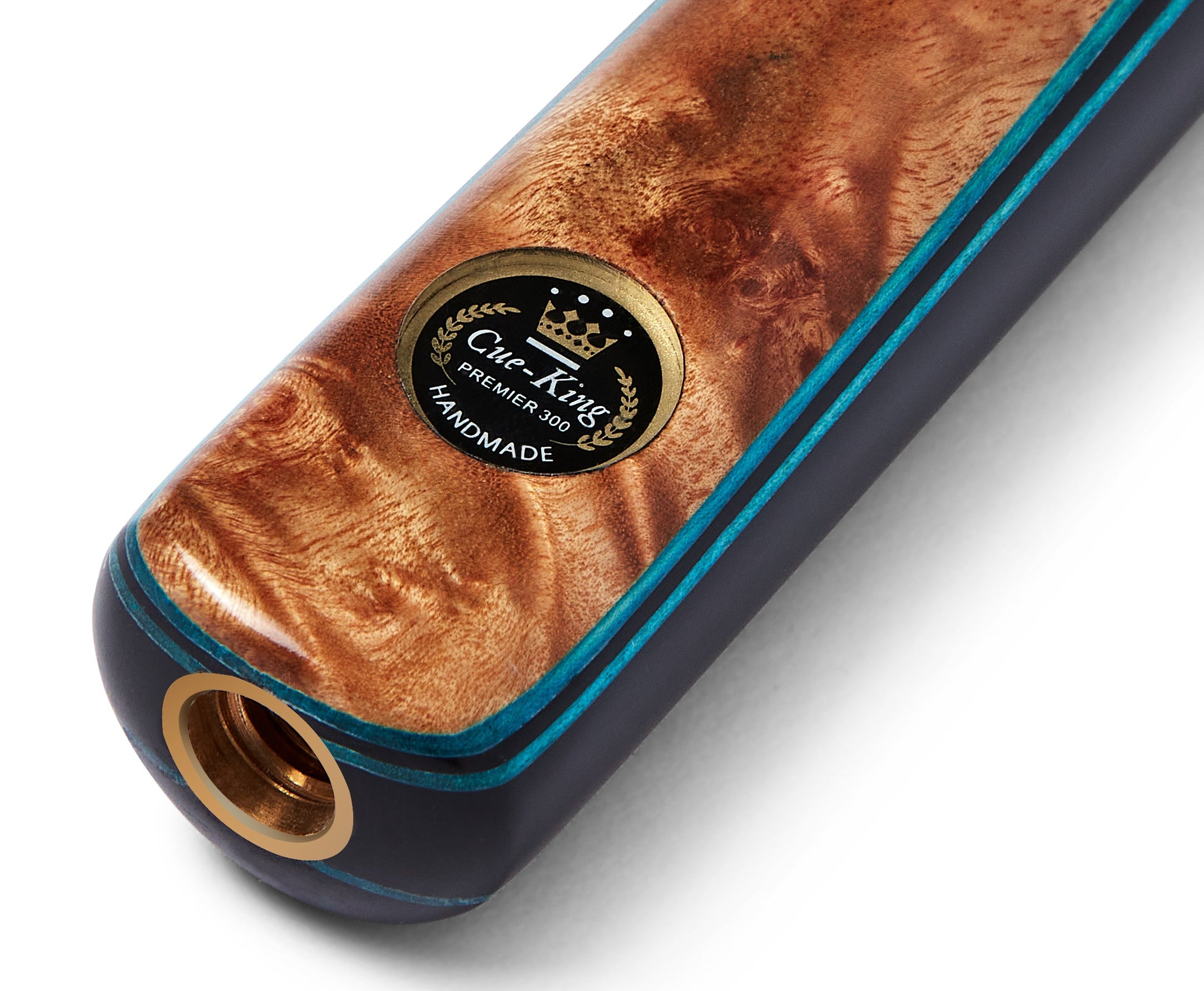
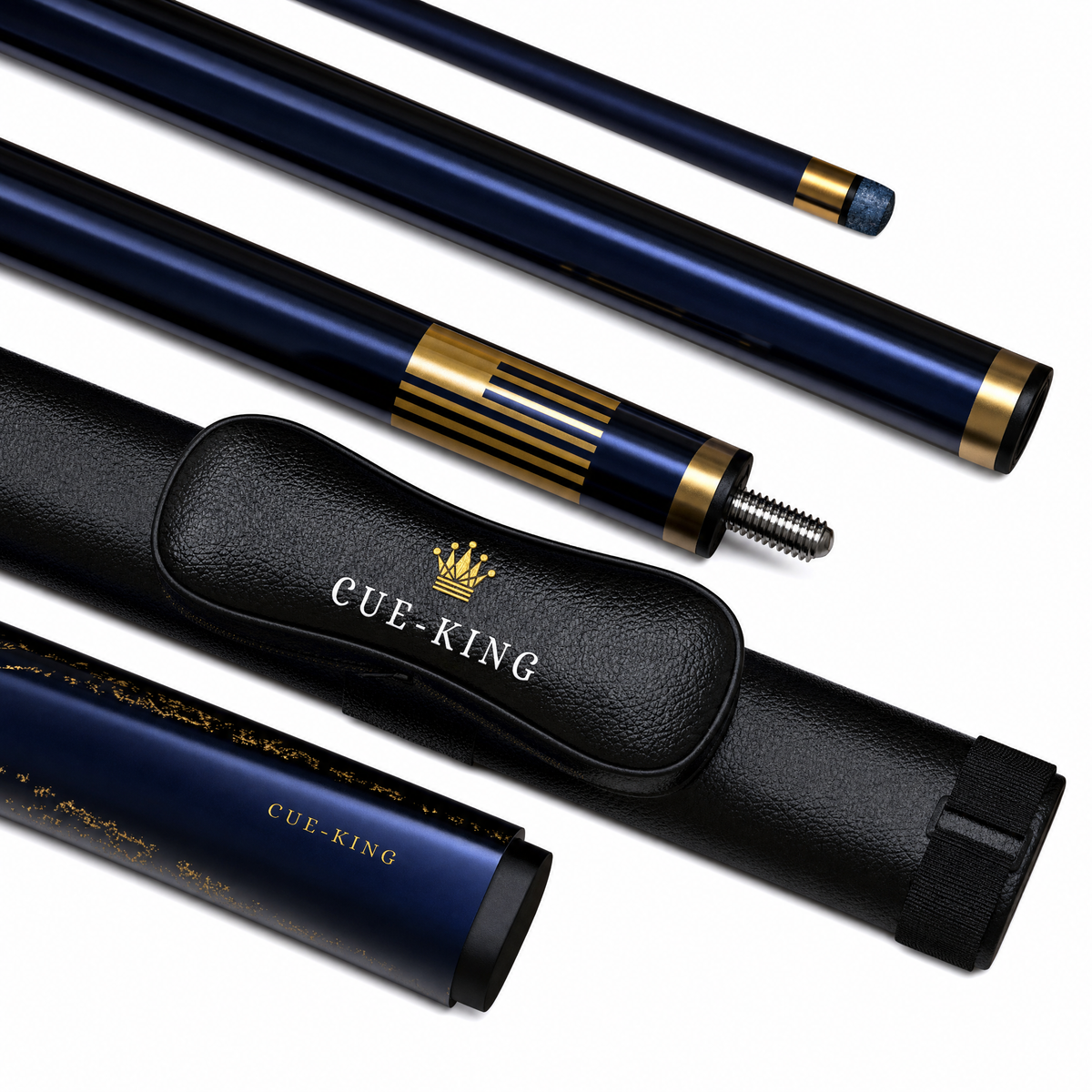
| Premier 300, aluminium-case set | 9.5mm | 3/4 joint | Ash and maple; aluminium case and telescopic extension |
| Canadian Maple pool cue | 13mm | 50/50 joint | Canadian maple shaft; check the individual listing for contents |
The Premier 300 aluminium-case set and Pro Series 001 share a slim tip and 3/4-jointed format, but their finishes and carrying packages differ. Compare the complete listing before deciding which combination you want.
4. Length, weight and room to play
Check the cue’s stated length and weight, but remember that balance affects how the same weight feels in your hand. Where possible, use a familiar cue as a reference. A heavier cue is not automatically more powerful in useful play, and a lighter one is not automatically easier to control.
The space around the table matters too. Confirm that you can make a comfortable stroke near cushions without striking walls or furniture. A different joint position changes storage length, not the assembled space required for a shot.
Can you use a snooker cue for pool?
Yes, particularly for English pool, where many players choose a slim-tipped snooker-style cue. Whether it suits you depends on its specification, the equipment you play on and your preferred feel. American pool is a separate comparison; do not assume a cue you enjoy for English pool will feel identical on an American table.
If you play several games casually, one cue may be a practical compromise. If you play one discipline regularly, buy primarily for that discipline. Follow the manufacturer’s intended use, especially for break shots, rather than assuming every playing cue is designed for every kind of impact.
Your buying checklist
- Identify your main game and the equipment you normally use.
- Check tip diameter, shaft construction, joint, length and weight.
- Verify the chosen variant and what is included.
- Check case fit using the cue’s section lengths, not only the exterior case dimensions.
- Confirm extension compatibility if extra reach matters to you.
Browse cue cases for suitable protection. If you are also replacing balls, our UK vs USA pool-ball size guide explains why pattern and table length alone do not confirm compatibility.
Ultimately, choose the cue that matches your main game and feels predictable to use. A clear specification and suitable package are a better basis for a decision than labels such as “professional”, a material name or a promise of instant improvement.


Leave a comment
This site is protected by hCaptcha and the hCaptcha Privacy Policy and Terms of Service apply.