

Choosing between carbon fibre, graphite-composite and wooden pool cues is not simply a question of which material is best. Start with the game you play, the tip size you prefer and the feel you want in your hands. Then compare the complete cue specification: a material label alone does not establish how a cue will play.
This guide explains how to compare the three options using current Cue-King models. It is a buying comparison, not a laboratory performance ranking: the models differ in more than their materials, so claims that one automatically delivers more accuracy or spin would be misleading.
Key takeaways
- Compare the actual shaft and cue construction, not just the colour or finish.
- Graphite-composite and carbon-fibre product labels should not be treated as interchangeable specifications.
- Tip diameter, joint format, length and weight deserve attention alongside material.
- Check the selected variant: different tip and case options can change what you receive.
- Choose a cue that suits your game and preferences; no material guarantees better results.
Carbon fibre, graphite composite and wood: a practical comparison
The examples below come from the current product listings. They illustrate available configurations rather than universal rules about every cue made from each material.
| Option | Verified Cue-King example | Tip diameter | Construction and format | What to check before buying |
|---|---|---|---|---|
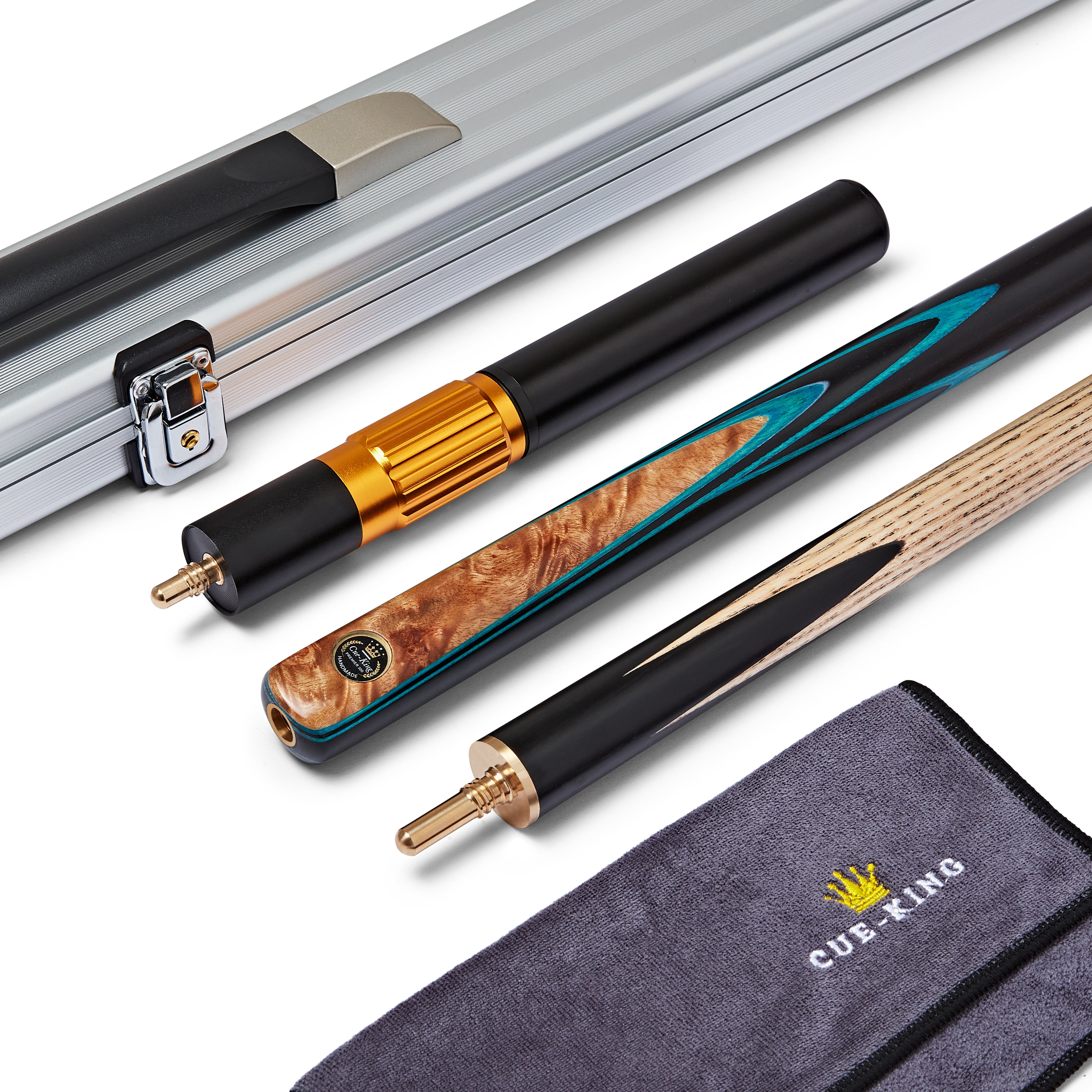
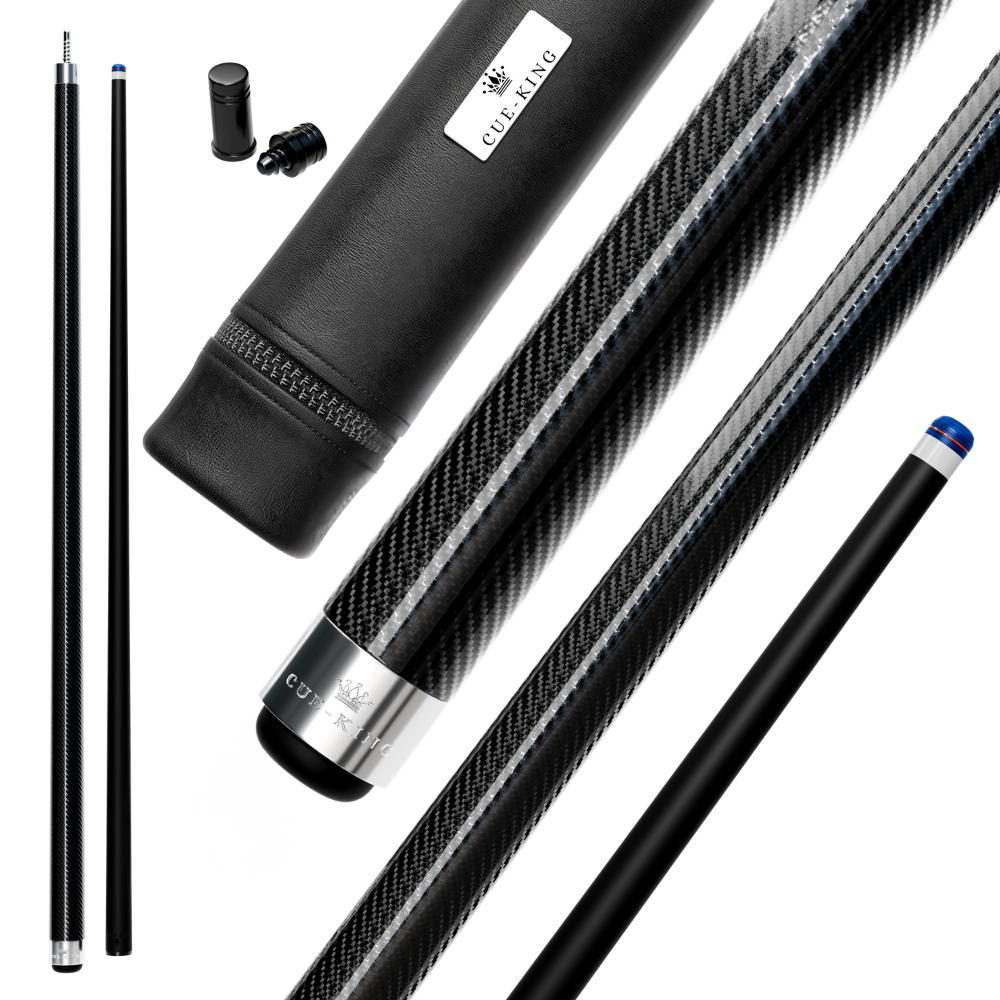
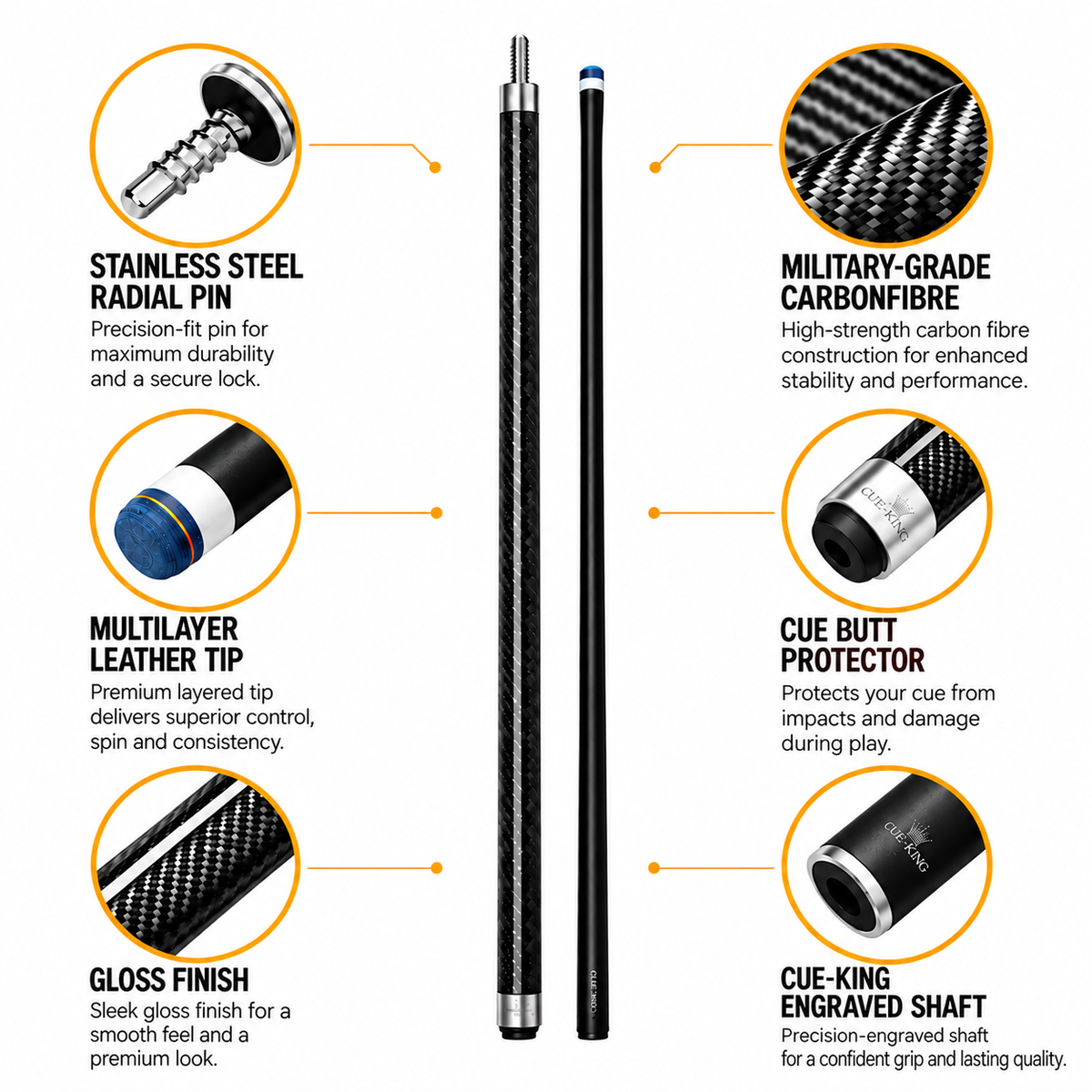
| Carbon fibre | Carbon Pro pool cue | 10.5mm or 12.5mm | 58-inch, two-piece cue; stainless steel joint; pro-taper shaft profile | Selected tip size and whether the case is included |
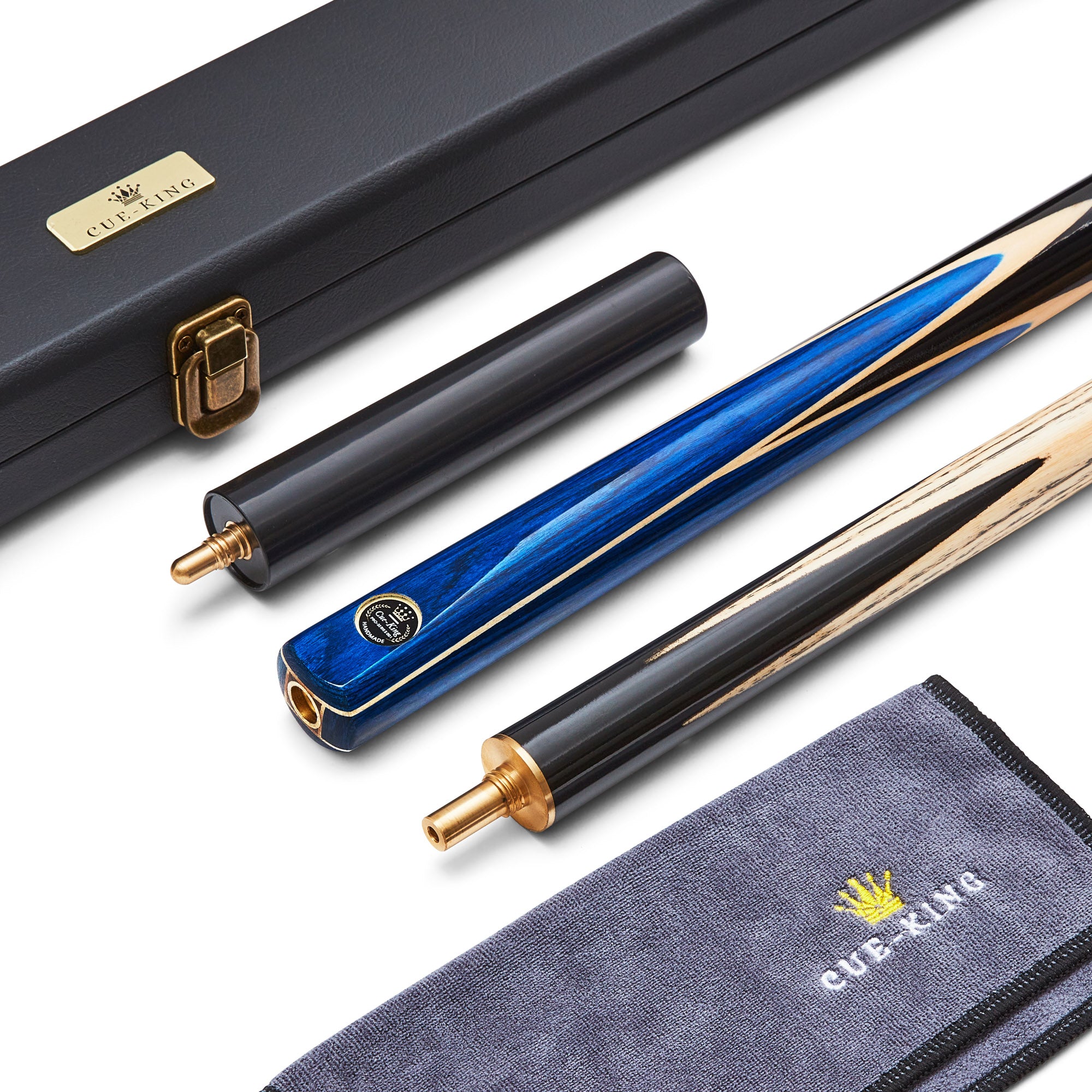
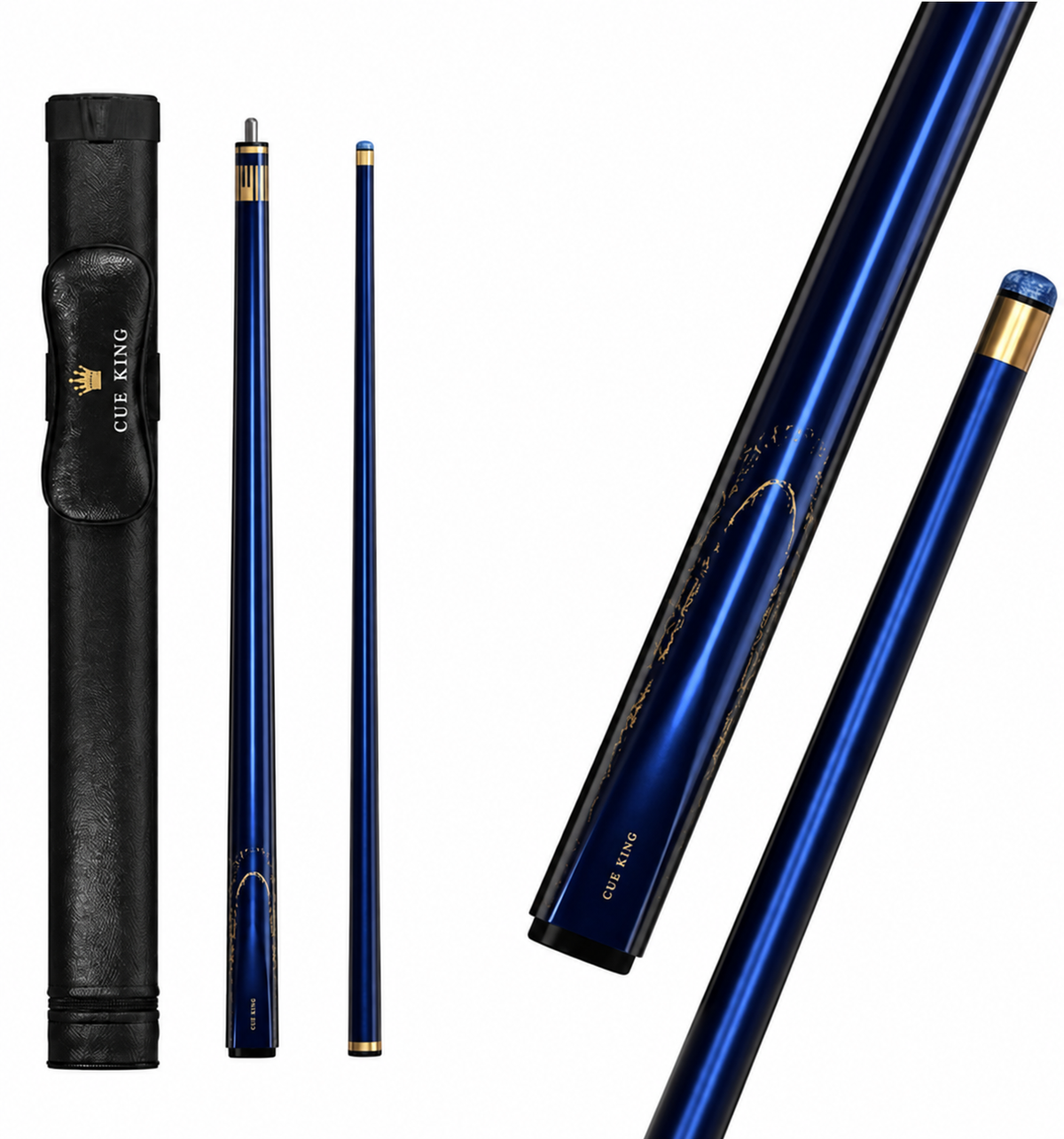
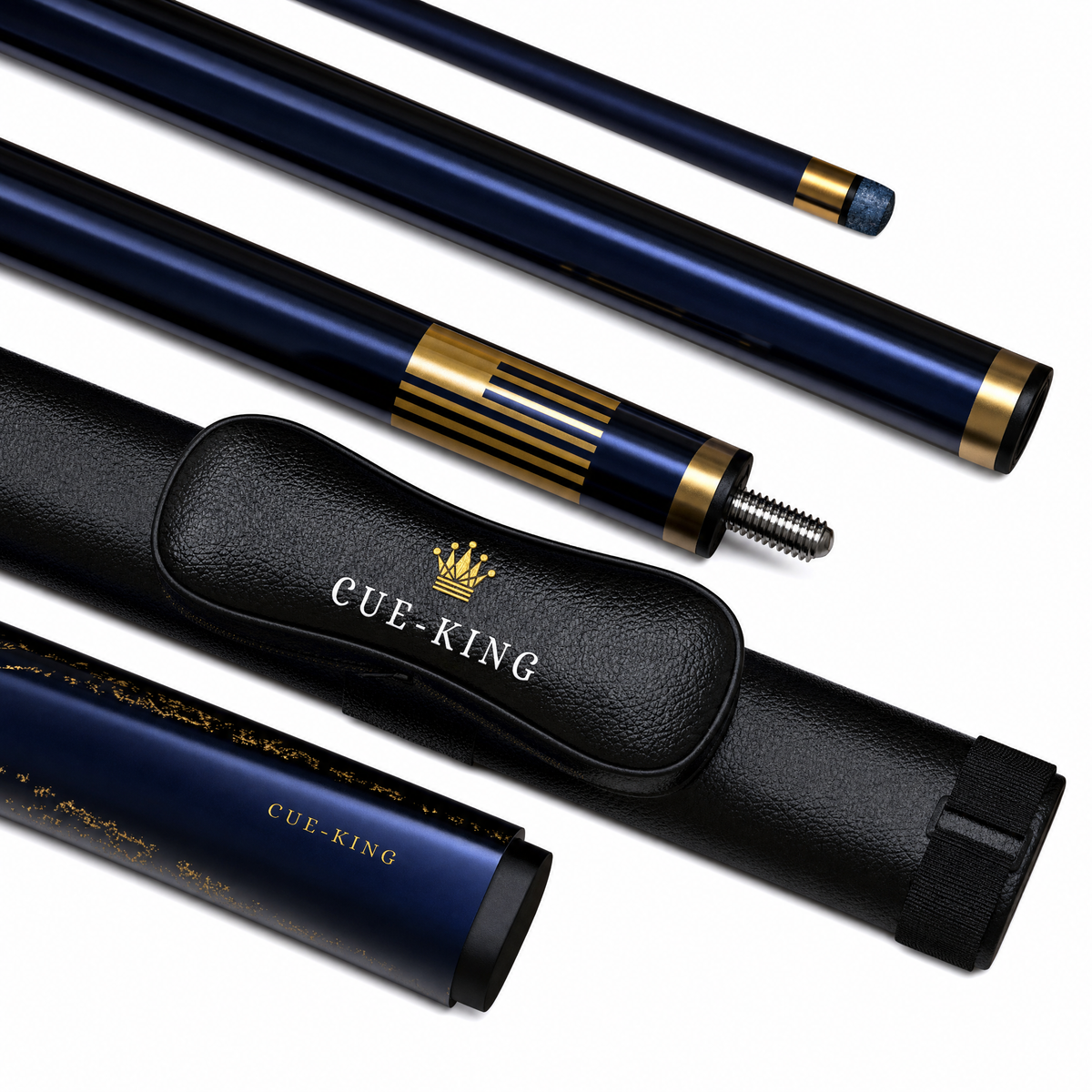
| Graphite composite | Ultra Graphite pool cue | 13mm | Graphite and fibreglass composite; two pieces; 58 inches; 20oz; ProFibre grip | Whether the 13mm tip, weight and grip match your preferences |
| Wood | Canadian Maple pool cue | 13mm | Canadian maple shaft; 50/50 joint; 58 inches; 20oz | Shaft material, joint position and your preferred tip diameter |
For more models and smaller-tip options, the pool cue collection includes a comparison table and tip-size filters. Check the individual listing before ordering because available configurations can change.
What should you look for in a carbon-fibre pool cue?
Look beyond the carbon appearance. Read which parts of the cue are described as carbon fibre, whether the shaft profile is specified and which tip options are offered. A photograph of a dark or patterned cue is not a substitute for its construction details.
In the example above, the listing specifies carbon-fibre construction, a gloss exposed-carbon finish and a pro-taper shaft profile. The 10.5mm and 12.5mm versions are separate choices, as are the versions with and without a case. Make those selections deliberately rather than assuming the main photograph shows the exact package in your basket.
Do not assume every carbon-fibre cue has the same balance, stiffness or cue-ball deflection characteristics. Those are properties of a particular design, not performance guarantees supplied by the material name. If low deflection is a deciding factor, ask for evidence about the specific model rather than relying on a general claim about carbon.
What does graphite composite mean when choosing a cue?
For the Ultra example, the product specification states graphite and fibreglass composite construction. That description matters more than trying to infer the construction from a short headline or an older product address.
Compare it as a complete cue: it has a 13mm tip, a 58-inch length, a stated 20oz weight and a ProFibre grip. Those details give you concrete points to compare with the cue you already use. If your current tip is much slimmer, the change in diameter may be more noticeable to you than the label on the material.
The word graphite should not be used as shorthand for a particular carbon-fibre shaft design. Ask what the manufacturer actually specifies, and avoid assuming that differently labelled composite cues are identical underneath their finish.
Why consider a wooden pool cue?
Wood remains an option for players who prefer a wooden shaft. Be precise when reading a listing: a maple shaft does not necessarily mean that every part of the cue uses the same wood, and a decorative butt finish does not identify the shaft material.
The maple example in the table specifies a Canadian maple shaft, a 13mm tip and a 50/50 joint. It shares a stated length and weight with the graphite example, but that does not prove the two will feel identical. Balance, grip and shaft shape also affect the handling you experience.
If you already enjoy a wooden cue, there is no need to replace it solely because another material sounds newer. Use your current cue as a reference and identify the specific characteristic you want to change.
Choose for your game before choosing the material
Start with tip size
Record your current tip diameter and think about whether you actually want a change. A larger or smaller tip is not an automatic upgrade. Avoid choosing a diameter simply because it appears on a more expensive cue.
If you move between disciplines, read the pool cue vs snooker cue guide before selecting a model. The game, ball setup and your preferences are more useful starting points than treating all cue sports as the same purchase.
Check transport and storage
Joint position affects how the cue separates and the case dimensions you need. If portability is important, compare the packed sections rather than just the assembled length. Our 2-piece vs 3/4-jointed cue guide explains this decision separately.
Compare like with like
When trying cues, keep the conditions as similar as possible. Use the same table and balls, start with familiar centre-ball shots and then try the shots you normally play. Notice comfort, grip and how easily you settle into your stance. A short trial cannot isolate the material from every other design difference, but it can reveal your preferences.
A simple buying checklist
Before ordering, confirm the game you mainly play, tip diameter, length, stated weight and joint format. Check whether the description identifies the shaft material or only a finish. Finally, confirm any selected options and the included accessories.
Keep the specification or order confirmation so you can check the delivered package against your choice. Follow the care instructions for that particular cue; do not assume a cleaning method intended for one shaft finish is suitable for another. Protect the cue during transport and inspect the tip and joint as part of normal care.
Which material should you choose?
Shortlist carbon fibre if its particular construction and available tip options match what you want. Consider graphite composite if the complete configuration, including the grip and tip, appeals to you. Choose wood if you prefer a wooden shaft and the model offers the specification you need.
The strongest buying decision is not “the newest material wins”. It is choosing a well-understood specification that fits your game, your hands and the way you carry and care for your equipment.


Leave a comment
This site is protected by hCaptcha and the hCaptcha Privacy Policy and Terms of Service apply.